Friday, September 28, 2012

Nurses strike after failed negotiations with Finance Ministry on hospital overcrowding; court demands that the state produce relief plan


The breakdown of recent negotiations with the Finance Ministry on relieving the distressing state of Israel's congested hospitals has led the nurses union to announce that they will no longer admit new patients to internal medicine units once they have reached 100 percent capacity.

Bed shortages in Israel's hospitals continues to be a growing issue, leading to overcrowding and impeding hospital staff's ability to provide an acceptable standard of care to admitted patients.

An OECD survey of hospital beds places Israel almost last - ahead only of Mexico - with a ratio of 1.9 beds per 1,000 people. Some 90 of the state's hospitals have been reported to be operating above capacity.

Occupancy rates in the internal medicine departments at Ashkelon’s Barzilai Medical Center, which treat mostly the elderly and those with chronic diseases, have reached 200 percent. At Kaplan Medical Center in Rehovot, the internal medicine units are full and the emergency department is operating at 160% occupancy.

Pediatric wards at Wolfson Medical Center in Holon are at 200% capacity, and the pediatric emergency department is also full. At Petah Tikva’s Schneider Children’s Medical Center and Haifa’s Carmel Medical Center, all beds are full, and at Emek Medical Center in Afula, the departments are almost all at 200 percent capacity. The Health Ministry has denied the hospitals' requests to refuse new admissions but has allowed an increase in shifts with additional doctors and nurses.

Bed shortages are causing patients to be placed in corridors and other areas of the hospital not designated or properly equipped for patient care. These patients, many of whom are geriatric, are forced to receive medical care in places not conducive to privacy and confidentiality standards, and in areas not sufficiently weatherproofed for the winter.

The Israeli Medical Association (IMA) conjunctively petitioned the High Court of Justice on the state's failure to add hospital beds, seeking immediate relief of 100 extra beds in intensive care units and 500 additional beds in internal medicine units within the year. 

In response, the High Court has severely criticized the government for the hospital bed shortages and has instructed it to submit a plan for the distribution of more beds by the end of February. According to state representatives, the health and finance ministries have reached an agreement to add 960 beds to the country's hospitals over the next six years but refuse to say how these beds will be distributed among hospitals.

The IMA fears that most of these beds will be distributed to maternity and preemie wards, which are profitable due to payments from the National Insurance Institute. This would leave very few beds for the overcrowded intensive care and internal medicine wards.

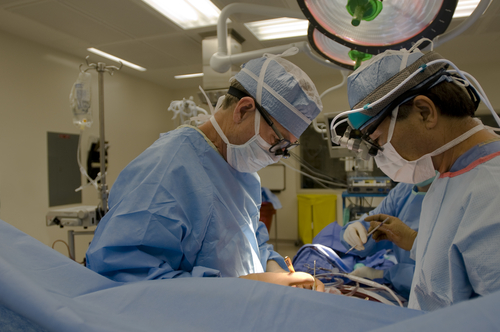
The first day of the warning strike concludes


The first day of the warning strike (Tuesday 5th April 2011) in hospitals and community health clinics has ended. 
  
During the day, staff at the IMA managed to maintain ongoing contact with the heads of committees in hospitals and HMOs, as well as with community physicians who were faced with questions and requests for clarifications. The public and patients turned to the IMA for information and assistance with troubleshooting. 
The IMA experienced excellent cooperation from the professional societies, doctors and public hospitals and despite the difficulties encountered during the strike, the justification for the doctors' struggle was recognized. 

Throughout the day, support teams visited various hospitals, including the Assaf Harofeh Medical Center, Shaare Zedek, Hadassah-Ein Kerem and Hadassah Mount Scopus. We have still not reached a solution to the disputes and yesterday (5.4) IMA representatives attended a negotiating session at the Ministry of Finance. Unfortunately, even this meeting ended without any progress; the Treasury and the employers repeated their offer to transfer the dispute to arbitration that would exclude several issues that are on the agenda of the IMA struggle.

The IMA repeated its position that it is not prepared to have arbitration with prior exclusions to acute issues such as private medical services and physician positions, and certainly not with a predefined cost framework, without giving flexibility to the arbitrator. In addition the IMA resents the arbitration proposal 8 months after the start of negotiations and after the Treasury stated its position that the previous arbitration agreement is 
invalid. 

Thousands of Doctors Attend Protest at Knesset


On Wednesday April 27th approximately 2,500 physicians, medical students and advocates assembled in Jerusalem at the Wohl Rose Garden opposite the Knesset to protest the government's failure to effectively address Israel's collapsing public health system.

After reaching a stalemate in discussions with the Treasury, physicians staged what turned out to be the largest protest so far in the battle for higher wages and health care reform.
Present at the demonstration were the dean of one medical school, numerous chairmen of major hospital departments and many young doctors worried about the future of their profession. No senior Health Ministry officials were present.

Many of those who attended the demonstration wore white medical jackets printed with the Israeli Medical Association emblem on the front and "Save Our Public Health System" on the back.

Dr. Leonid Eidelman, chairman of the Israeli Medical Association, said that the rally was organized to "protest the lack of progress [in talks with the state] and is another attempt to move the wheels of negotiations forward and to find solutions to save the imploding public health system."

As of now, the IMA is negotiating on behalf of 17,000 doctors employed in governmental hospitals, the Clalait, Leumit and now Meuhedet HMOs, as well as the Jerusalem NGO-owned hospitals such as Bikur Holim, Shaare Zedek Medical Center, and Hadassah University Hospital.

Medical students from all four medical schools in the country have also taken up the cause, with around a thousand students who were driven from their various universities to the capital in order to protest. The students have declared a strike and classes were canceled for the day.

“The public health system is collapsing,” warned Dr Eidelman during the protest. “It is the time for us to be heard. The population is expanding and aging. We have the know-how, but the lack of resources has weakened our ability to treat our patients. It is harder and harder to persuade a young resident to study unattractive medical specialties.”

Opposition head MK Tzipi Livni said she had come to support a “struggle of which there is none more worthy... Over 7.5 million Israelis have the right to decent healthcare, and not two medical systems, one for the rich and one for the poor.”MK Livni accused the government of “failing in this task” and called on the demonstrators to “roll up your sleeves.” 

According to Kadima MK Rachel Adatto, a gynecologist and lawyer by training, “In a well-run state, this demonstration would be unnecessary. There are not enough doctors, and the healthcare system is run by Treasury bureaucrats who do not understand it.”
  She openly called onPrime Minister Binyamin Netanyahu to sit with IMA and Treasury officials and not leave until a solution is found to this crisis.
To this date, all meetings between the IMA and the Finance Ministry have ended without an agreement.

Doctors set to strike over next two weeks as negotiations remain unsuccessful


Despite an ongoing series of sanctions and protests launched by the Israeli Medical Association six weeks ago, negotiations with the government on public health reform and increased wages for physicians remain unsuccessful.
In an Army Radio interview last week, Treasury wage chief Ilan Levin said that doctors were performing "murder" by endangering patients during strikes and sanctions. Following the incident, the IMA suspended all negotiations until an apology was issued. 
Levin has since apologized, stating that while he opposes the doctors' actions and demands, he has much appreciation for the work and contributions of doctors to society and their professional level, and that the use of the word "murder" was out of context and does not represent his views.
The IMA welcomed the apology, adding that if it had been issued earlier during the last negotiating session, he would have saved "three days of needless strife."  IMA Chairman Dr. Leonid Eidelman stated that it is “unfortunate that Ilan Levin continues to question the legitimacy of the doctors’ struggle despite the fact that it is legitimate legally and morally.”
Throughout the strikes, the IMA’s “exception committees” have worked to ensure that all urgent medical needs are addressed. The committees have approved more than half of the 100 requests for treatment presented by patients and their doctors.
On Tuesday May 3rd, another set of doctor strikes began, putting public hospitals and outpatient clinics throughout the country on a restricted schedule for the remainder of the week and part of the following week as well.
Sanctions were held on Wednesday in a number of the Clalit Health Services and Kupat Holim Leumit community clinics. Clalit clinics of the Sharon/Shomron District were closed in Ra'anana, Herzliya, Kfar Saba, Netanya, Hadera-South, Beersheba, Kiryat Gat, Netivot, Ashkelon and Sderot. Leumit Jerusalem District community health clinics were shut down as well.
On Thursday, outpatient clinics in hospitals south of Tel Aviv and the Tel Aviv Sourasky Medical Center will be closed.
On Sunday May 8th, a majority of the country's pathologists will attend a pathology conference, which will significantly reduce operations scheduled to occur on that day which require the examination of biopsies for cancer and other diseases.
No sanctions will be held on Memorial Day for the Fallen or on Independence Day.
On Thursday May 12th, outpatient clinics will be closed in all public hospitals north of Tel Aviv and at Sheba Medical Center at Tel Hashomer.
As usual, physicians will continue to treat all patients in life-threatening situations, even on days of serious sanctions.

IMA conference on the Physician shortage: How we got to this situation?


The shortage of thousands of doctors in Israel: the situation, exchange of ideas and possible solutions.

At a conference held in Tel Aviv on the 18th May on the shortage of physicians in Israel, Dr Eidelman, Israeli Medical Association President, stated that the physician shortage is worsening, and that this phenomenon is affecting the work in all hospital departments. "Hour after hour patients pay the price for this shortage." The IMA has placed the issue of the physician shortage as a top priority in the negotiations with the Treasury.

Representatives from the Ministry of Finance were invited to take part in the conference, however they refused to participate.

During the conference Dr. Eidelman stated that "Doctors feel the impact of a drying health system every day. The shortage is at our expense and at the expense of patients: patients die due to the shortage of doctors. They die because the doctor was tired from doing 10 shifts a month, and because the doctor does not have time to examine them sufficiently. Clinic physicians have five minutes for each patient: to review the patient's medical file, identify the illness, decide on a treatment and to explain this to the patient. "

Member of Knesset Dr. Rachel Adato, also spoke at the conference, she said that "the current governments claims to add 960 beds in six years, in order to save the public health - is like pouring sand in our eyes.  At the end of the day, the Ministry of Finance are the ones who run the health system, and for them Health is always the last priority.”  MK Dr. Adato demanded that the Prime Minister, Benjamin Netanyahu, intervene immediately to resolve the crisis.

Director General of the Ministry of Health, Prof. Ronni Gamzucalled on a system to plan for the next 10-15 years.  Prof Gamzu reported that the country has grown every year by about 130 thousand inhabitants, and in order to maintain the current rate of doctors per thousand inhabitants, it is necessary to increase the number of new doctors entering the profession.  
 
Prof Gamzu stated that in order to resolve the immediate crisis and the shortage of doctors, we require more students in the existing medical schools, the addition of the new medical school and at the same time we must also embrace students from abroad to enable them to complete their studies in Israel.

Michael Schonstein, Health labour market specialist, from the OECD, presented the international data indicating a need to redefine the image of the health workforce. According to this data, the health sector is a growing field in OECD countries, responsible on average for 9% of GDP and 10% of employment in these countries. In Israel, however, health expenditure is about 7.8% of GDP, which is lower than the Western world. According to the data presented, between 2000- 2008 Israel recorded a very low growth in the number of doctors relative to the population and significantly less than the OECD average.
 
Mr. Schonstein warned that the age of the physician workforce compared to and the rate of training is not sufficient. According to the analysis presented, we must ensure that the number of medical students coincide with the number of doctors aged 55 and above. Israel now stands on the brink of the need to replace a large population of physicians, who joined the system during the great immigration wave from the former Soviet Union. However, there are not enough new medical students to replace the ones leaving the profession. Countries facing a similar situation, examine the possibility of postponing the retirement age for physicians.

Dr. Matthias Wismar, Senior Health Policy Analyst from the WHO Observatory predicted that the labor market will continue to open allowing doctors to work and study in different countries. Certain countries rely much more than others on health professionals coming from abroad to address the growing shortages in the health workforce and meet increasing needs. 25% of U.S. physicians, 23% in Switzerland, 36% UK and 39% New Zealand - have been trained in other countries. Dr Wismar identified the most influential factors on the emigration of doctors to be wage gaps, followed by career opportunities, and working conditions.
  

Lag B’Omer Rally - Doctors unwilling to continue to put out fires


On lag B’Omer the IMA held a rally in protest of the lack of progress in the negotiations with the Mministry of Finance. Two months after the IMA declared a labour dispute, approximately 1,500 doctors, interns and medical students attended the rally threatening to upgrade the protest.

Dr. Eidelman, president of the IMA stated: "We are in the midst of a struggle over the future of medicine in Israel. Lag B'Omer is not only a day of bonfires, we are gathered on this day to bring an end to the epidemic occurring before our eyes, when we cannot save lives because the government saves the expense of public health. We have to stop the epidemic of the neglect of the public health system.
 
“We shall continue our struggle until we have brought news, to the residents of Israel, of a true reform in the health system. We will continue to struggle for months if necessary.

"Prime Minister Benjamin Netanyahu, it's time for the public health system reform, it is time to change priorities for increased investment in the health system. It is time to relate to life and save lives.”
 
During the rally fires were lit under the slogan "Doctors unwilling to continue to put out fires." The protestors stated that by July they will only work to rule and without extra hours, which the doctors claim they are not being paid for. 

Government appeals to the labour court to set an injunction against any further stoppages by the IMA and doctors


At the end of May, the Ministries of Health and Finance appealed to the Tel Aviv District Labour Court requesting that they issue an injunction banning the Israeli Medical Association and doctors working in public hospitals from any further work stoppages. 

The IMA stated that the only reason for submitting an application to the court by the Treasury is an attempt to thwart the resolution of the doctors conflict and avoid solving the main issues. The IMA is taking moderate steps in the sanctions out of responsibility to the public.
The Ministries appeal stated that the IMA is taking advantage of its power to advance the interests of its members and added that they would offer the doctors accelerated negotiations, monitored by the court or arbitration.

On the 2nd June, the Tel Aviv district Court rejected the petition by the state. The court accepted a compromise proposed by the IMA, under which the doctors will limit their labor sanctions. The court also ordered the parties to conduct intensive negotiations for two weeks, after which they will notify the court of the progress in the talks.
Judge Michael Spitzer told the Ministry of Finance, there is no case for an injunction because the doctors had not completely shut down the health system, and were only taking "measured" steps.
Both the IMA and the Ministries expressed satisfaction with the ruling.